
.svg)
.svg)







Introduction
As you know doctors keep your problems quite confidential, but one thing that you don’t know is they often keep their problems a secret to the outside world. If they let you know their every thought, you might end up trusting them less. Offcourse they are not experts for every health problem, and especially when it comes to These are chronic, food-driven conditions and can surely be reversed, if dealt with closely. This blog will be digging deep into the things that your doctor doesn’t want you to know.
5 things your doctor doesn’t want you to know about their knowledge.
1. Not specialists in Nutrition science
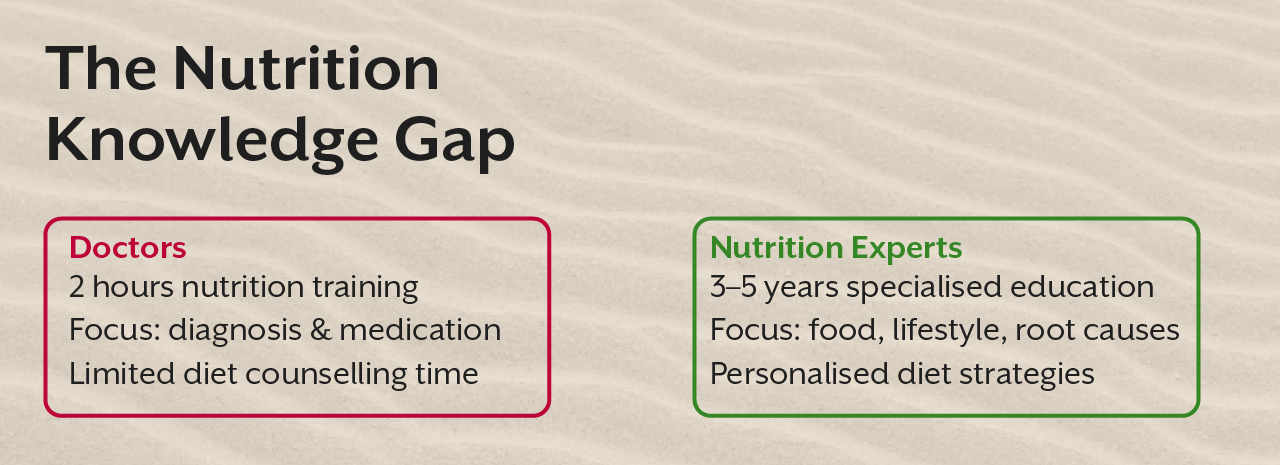
This fact stands true and proves that doctors have a dearth of Nutrition knowledge- Education/ training in nutrition. A doctor, throughout his/her course of MBBS or the other related courses, undergoes approx 2-hours training on the subject of Nutrition. Quite less as compared to a full-blown Nutrition degree program!
Nutrition and Dietetics programs typically involve either 3‐year Bachelor’s and 2‐year Master’s level training to develop competence and enable accreditation in providing dietary counselling services and medical nutrition therapy to patients. It is therefore understandable that doctors report having a lack of confidence and knowledge or indeed the complex skills required for effective, person‐centered nutrition counselling.
iThrive is a team of qualified Functional Nutritionists who’ve excelled in their work by helping people reverse their chronic, debilitating lifestyle conditions and giving them a deep hope of living healthy.
2. Root cause analysis
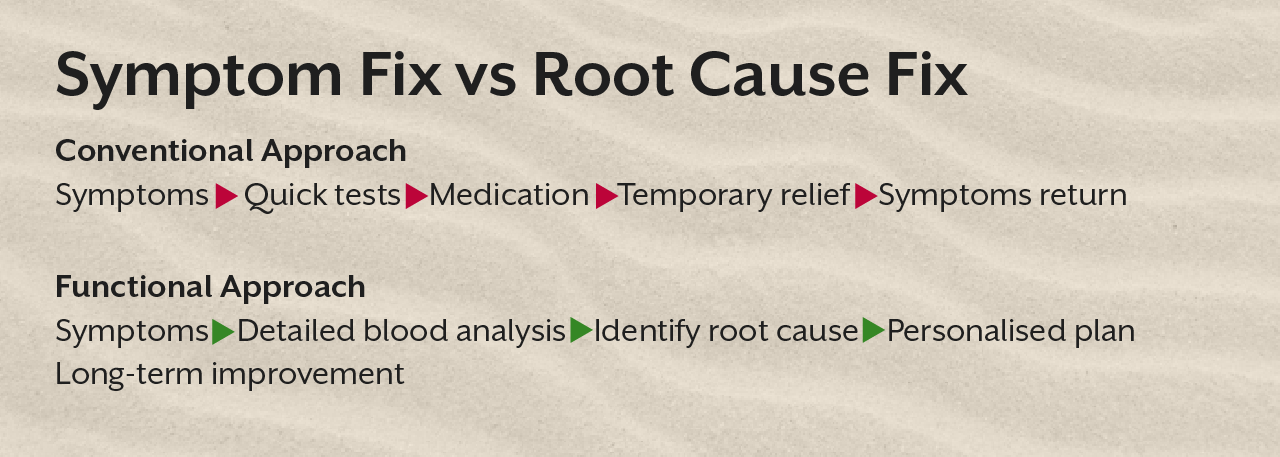
Doctors often order medical (blood) tests and fail to address them optimally. By giving just a superficial look at the deranged tests, they try to fix the problem primarily with medications and at best with their super-speedy-general dietary advice.
Your blood report is the way your body speaks. It reveals the overall internal health and helps you find out a lot of information and processes that might be going wrong inside the body. At iThrive, a thorough root cause analysis forms the very first step of finding the root causes of all the lifestyle- related problems followed by a detailed explanation of the same.
(Click on the link to know what CBC tell you about your health: https://www.thrivefnc.com/blog/things-you-need-to-know-about-cbc/)
It sometimes also happens that your doctor might give you a mis-diagnosis or an extreme diagnosis while the problem is totally due to faulty eating and lifestyle practices. So you should really be aware of whom you put your trust in when trying to deal with lifestyle problems.
3. Time constraints
On an average a doctor does not spend more than 5 minutes with his patients. Dietary and lifestyle plans in just 5 minutes? Does not sound like a disease-healing plan! Although patients trust their doctor and hold their advice in high regard, their doctor might not have the time and skills to effectively communicate optimal diet advice that can enable their patients to make behavioral change.
4. One-on-one healing approach
Your doctor may not really have time for diet counselling because it requires proper intervention and one-on-one connection in order to counsel people with correct dietary choices. This can only be done by expert nutrition coaches who spend time on and have relevant experience of coaching and counseling people.
Our coaches are expert Functional Nutritionists and follow an one-on-one healing approach to reversing lifestyle problems as opposed to a 5-minute generalised advice by a doctor.
One thing that we have discovered and your doctors definitely do not want you to know is that one-on-one healing as incorporated here at iThrive is an approach involving bio-individuality which is the most sustainable way of addressing and treating any health issue.
5. Medications create a havoc, until absolutely necessary
Doctors are pundits when it comes to suppressing symptoms of a health problem. They think by waving the magic wand of prescribing various drugs, they are doing good if not the best to help the patient. This is, however, deteriorating conditions all the more because lifestyle diseases can easily be treated, or even reversed with a dietary regimen alone.
Long-term intake of certain drugs, for e.g NSAIDs (Non-steroidal anti-inflammatory drugs) cause hormonal imbalances, massive gut health issues which further result in poor immunity.
One of the main objectives of nutrition coaches at iThrive is to bring down and eventually stop the use of medications with its tailor-made protocols.
iThrive is a functional nutrition based healing approach which involves a holistic and comprehensive process of dietary and lifestyle protocols, which makes it possible for us to heal all the modern day diseases efficiently. With our unique, real time response and one-on-one strategies, iThrive holds and stands by the ‘disease-reversal’ claim adeptly.
Conclusion
Look, we're not here to bash doctors. They are brilliant, hardworking people who save lives every single day and that deserves enormous respect. But let's be honest with ourselves when it comes to food, lifestyle, and the slow, creeping damage of chronic disease, the conventional medical system simply wasn't built to handle it. A 5-minute consultation and a prescription pad was never going to undo years of the wrong food, the wrong habits, and a body quietly struggling to cope.
The truth is, nobody is coming to save you from your lifestyle. Not your GP, not a pill, not a quick Google search at 11pm. What actually works and what has always worked is someone sitting with you, understanding your unique body, your history, your bloodwork, your stress, your sleep, and then building something that's actually meant for you.
That's not a luxury. That's just how healing is supposed to work.
So the next time your doctor waves off your fatigue as "stress" or hands you a generic diet sheet on your way out the door, remember there are people who will go deeper. Who will ask the questions that don't fit into a 5-minute window. And honestly? You deserve that kind of attention.
Your health isn't a checkbox. Stop letting it be treated like one.






.webp)











.svg)